Chernobyl at 40: The Strategic Power of Second-Order Effects
A thought experiment on energy, fear, and why the biggest geopolitical shifts happen after the crisis.
Today, the sirens in Pripyat are silent, buried under forty years of concrete and myth.
We usually observe this anniversary with a predictable script: we talk about the “liquidators” who shoveled graphite off the roof, the design flaws of the RBMK reactor, and the slow collapse of the Soviet Union. We treat it as a ghost story—a haunting reminder of what happens when a regime’s hubris meets a technical meltdown.
But we may be studying the wrong map.
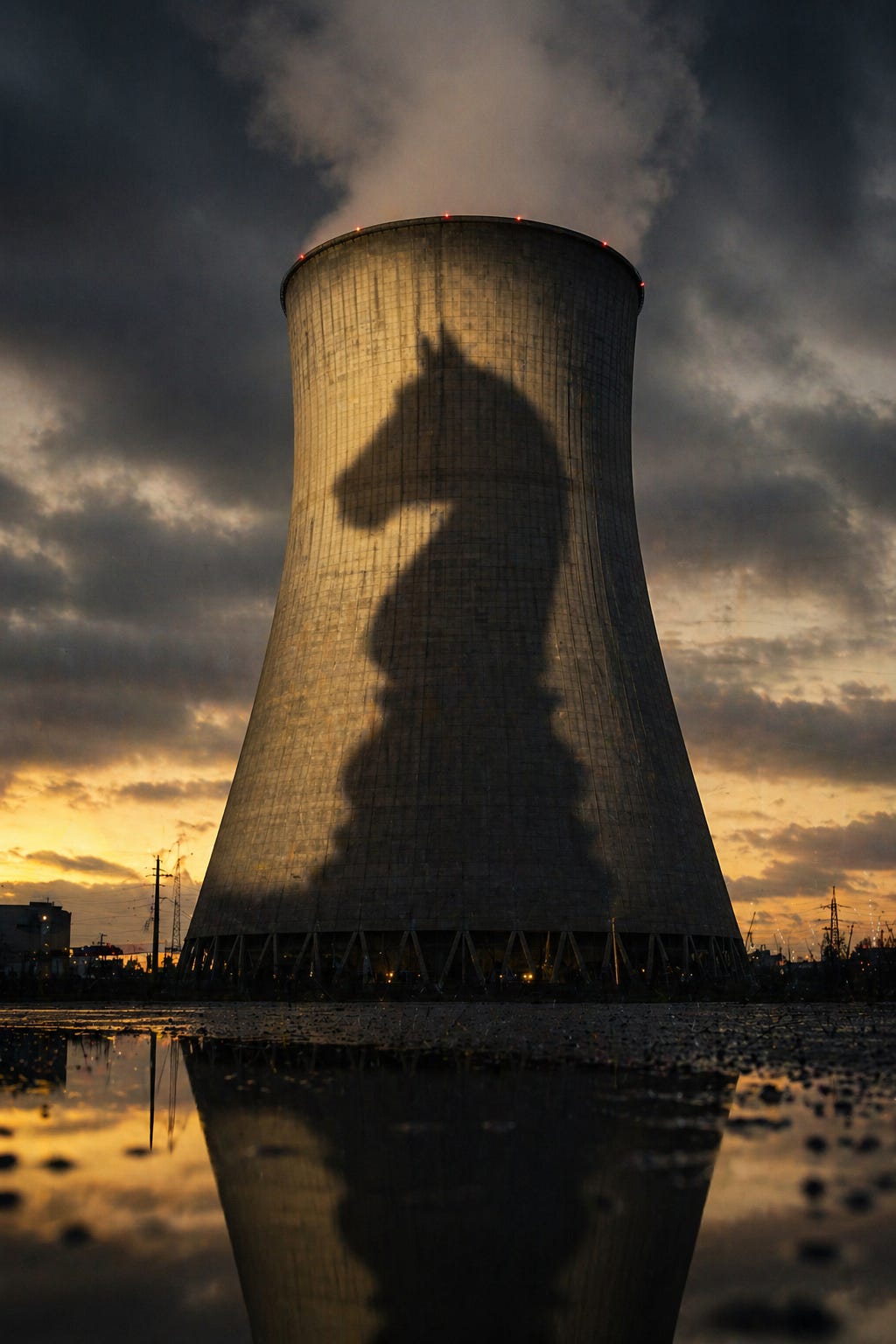
If you want to understand the modern world, you have to stop looking at the radiation charts and start looking at the geopolitics of second-order consequences. The real lesson of Chernobyl wasn’t about the dangers of the atom. It showed how a single night of tactical failure can reshape strategic realities for decades.
The Vacuum of the Aftermath
Most leaders think in election cycles or quarterly returns. They react to the fire in front of them.
But serious strategists—the ones who actually move the needle of history—think in decades. They know that an event’s direct damage is often the least important thing about it. What matters is the decision-making vacuum that follows.
A financial crisis is a tragedy for the middle class; it’s a consolidation play for the elite.
A pandemic is a health emergency; it’s a stress test for sovereign supply chains.
A technological failure is a PR disaster; it’s a chance to rewrite the moral framework of an entire continent.
Chernobyl didn’t just leak isotopes. It leaked political psychology. It transformed energy from a technical necessity into a moral battlefield, specifically in Germany—the industrial engine of Europe.
The Emotional Pivot
Germany is an engineering nation. Reliable, high-density baseload power is the “operating system” for its manufacturing, its chemical giants, and its global export strength.
After 1986, that operating system began to change under political and emotional pressure.
Chernobyl became the permanent emotional anchor for a generation. It turned “nuclear” from a physics term into a visceral fear. Over the decades, through changing governments and the eventual shock of Fukushima, this psychological pressure led to the Energiewende: the total exit from nuclear power.
But physics is indifferent to emotion. When you delete a massive source of baseload energy, the gap doesn’t vanish. It has to be filled.
And it was filled, in staggering proportions, by natural gas.
Specifically, gas from the East.
The Long Game: A Thought Experiment
Consider this: You are a planner in Moscow in the late 1980s. You know you cannot out-innovate the West. You cannot out-produce the German factory. Your empire is creaking.
What do you do? You look for asymmetric leverage.
You don’t need a movie-style conspiracy to “cause” an accident. History provides enough design flaws and human errors for that. You only need the patience to manage the consequences.
You ask:
Which fears can we nourish to shape our rivals’ policy for generations?
Which “bridge fuels” can we offer that feel like a solution today, but create a trap tomorrow?
How do we make our neighbor’s industrial survival dependent on our goodwill?
This is how strategy works in the real world. It’s not a red button; it’s a slow-motion alignment of incentives. While the West was solving a technical crisis, the East was solving a dependency crisis.
The 2026 Reality Check
Forty years later, the bill has come due.
We’ve learned—painfully—that a dependency that feels efficient in stable times becomes a weapon in unstable times. We’ve realized that you cannot separate “energy policy” from “security policy.”
This isn’t just a history lesson. It’s the blueprint for the next decade:
AI Models: Who controls the weights that guide our logic?
Semiconductors: Where is the bottleneck of our intelligence?
Rare Earths: Who owns the ground beneath our “green” future?
If you choose the cheapest solution today without asking what optionality you are surrendering tomorrow, you aren’t leading. You are being managed.
The Modern Leadership Lesson
The winners of the next decade won’t be those who manage events. They will be those who manage the aftermath. If you are only reacting to the crisis on your screen, you’ve already lost. The real game is happening in the second and third-order effects—the subtle shifts in public trust and the closing of doors that were once wide open.
Chernobyl was a tragedy, yes. But for the strategist, it remains the ultimate reminder:
The most dangerous radiation isn’t the kind that hits your skin. It’s the kind that changes how a nation thinks.
If this perspective on strategy and second-order effects resonated with you, consider subscribing. We don’t just look at the news; we look at the machinery behind it.
First published on Substack.